


The Corporate Responsibility Report: Purpose, Value, and Impact
 Share
Share


 Copy Url
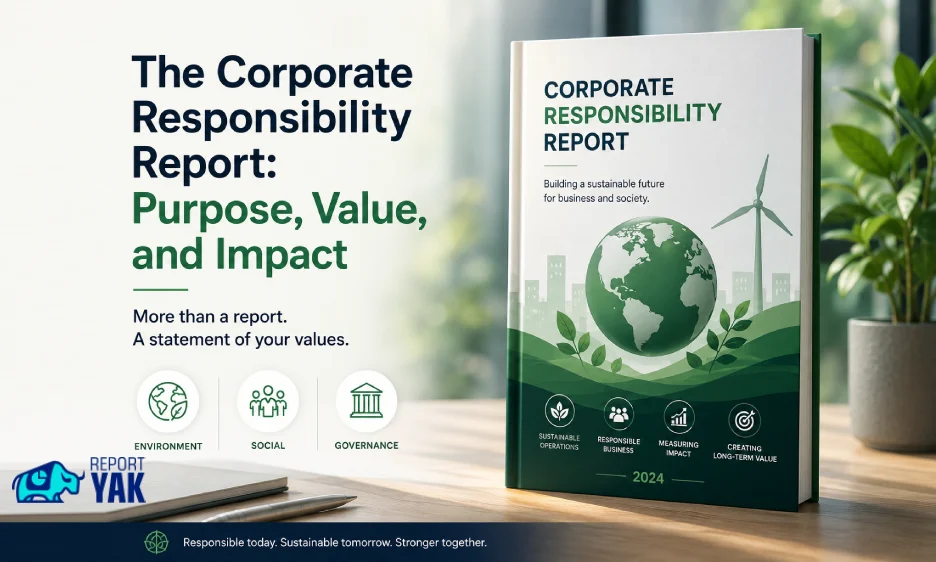
Your corporate responsibility report is more than just an annual publication. It is a powerful statement of your company's values. Before investors, stakeholders or customers dig into your financial results, they see how you handle your impact on society and the environment. That first impression shapes their trust in your brand.
A well-crafted report communicates your environmental and social commitments. Progress over time becomes visible through clear data and genuine accountability. From reducing pollution to volunteer efforts and supplier practices, it tells the full story of your CSR initiatives.
Yet many companies treat this report as a formality. They gather data and tick frameworks like GRI or SASB. Then they publish without a clear strategy. That is a missed opportunity. Your corporate responsibility report can strengthen corporate reputation and build stakeholder engagement. It demonstrates your company's commitment to sustainable development goals.
At its best, it provides stakeholders with a holistic view of your sustainability and financial performance. This is a data-driven narrative backed by KPIs and qualitative insights.
This guide walks you through everything you need to know about creating a report that truly matters. Whether you are a first-time reporter or refining your CSR strategies, you will learn what makes strong CSR reports stand out. You will also understand why professional design matters.
What Is a Corporate Responsibility Report and Why Does It Matter?
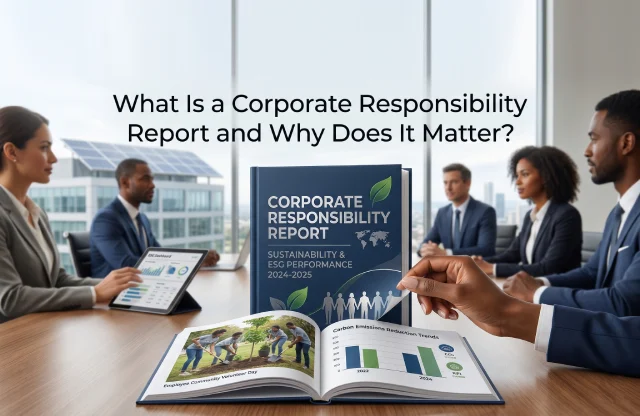
A corporate responsibility report is a document that shares how a company handles its impact on society and the environment. It goes beyond financial results. It covers non-financial information like greenhouse gas emissions, employee engagement, and corporate governance. Many people also call it a CSR report, sustainability report or ESG report.
The purpose is clear. It shows your company's commitment to responsible business practices. It builds trust with stakeholders who care about your sustainability practices and social impact.
a. Defining the Corporate Responsibility Report
A corporate responsibility report is not a financial report. This type of report focuses on environmental and social performance. You will find data on water use, reducing pollution and supply chain practices. Qualitative stories about CSR activities and philanthropic initiatives bring those numbers to life.
This type of report has become essential for modern businesses. Investors use it to evaluate long-term business health. Customers use it to decide which companies to support. Employees use it to understand if their work aligns with their values.
b. Who Publishes Corporate Responsibility Reports?
Many types of organizations publish these reports. Multinational companies and listed companies often produce them annually. Some regions now require it through regulations like the Corporate Sustainability Reporting Directive or CSRD. But even companies not required to report are publishing voluntarily. They want to build trust and show transparency.
NGOs, institutions and smaller businesses also create CSR reports. The goal is the same. They want to share their sustainability efforts and track progress over time.
c. Why It Matters Beyond Compliance
A strong CSR report does more than meet disclosure requirements. A strong CSR report builds stakeholder trust and enhances corporate reputation. When done well, it shows your company takes accountability seriously. Responsible leadership and corporate governance become visible through every page.
Stakeholders increasingly expect this transparency. ESG issues matter to investment decisions. A well-prepared report signals that your business thinks long-term. It shows you integrate sustainability into your corporate strategies. It also helps you identify trends and measure progress on key issues.
When done well, a corporate responsibility report becomes a tool for business value. It strengthens relationships with investors, customers, employees and partners.
Key Components of a Strong Corporate Responsibility Report
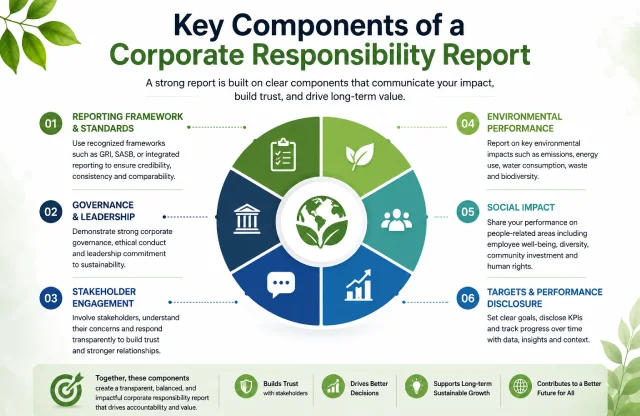
A strong corporate responsibility report is built on clear components. Each part plays a role in communicating your company's values and performance. The best reports balance hard data with compelling storytelling. Here is what really matters.
1. Setting the Framework - GRI, SASB, SDGs, and More
Strong CSR reports follow recognized reporting standards. This adds credibility and makes your data comparable across companies and years. The Global Reporting Initiative (GRI) is one of the most widely used frameworks. SASB focuses on sustainability accounting for specific industries. The Sustainable Development Goals (SDGs) help companies align their work with global priorities.
Using a framework shows you take responsibility reporting seriously. It also helps you meet evolving standards and regulatory requirements. Many stakeholders expect to see which framework your company follows. Integrated reporting frameworks go further by combining sustainability and financial information into one coherent narrative.
Without a framework, your report may feel incomplete. Comparing progress over time becomes harder. Stakeholders may question the quality of sustainability reporting.
2. Environmental and Social Performance Data
Your report should share real data on environmental impacts and social performance. This includes greenhouse gas emissions, water use and progress on reducing pollution. On the social side, include employee engagement scores, volunteer efforts and community initiatives.
Clear KPIs and key performance indicators make the report more credible. Stakeholders want to see numbers, not just claims. Data-driven reporting builds trust. It also helps you identify trends and refine your CSR strategies over time.
Supplier practices and supply chain transparency matter too. Modern readers expect to see how your company handles sourcing, labor standards and ethical practices across the value chain.
3. Governance and Accountability
Governance is a core part of ESG issues. Your report should cover corporate governance structures, accountability mechanisms and leadership commitments. Who is responsible for sustainability at your company? Many organizations now have a Chief Sustainability Officer leading these efforts.
Transparency in how decisions are made builds confidence. Share how your board oversees sustainability goals. Explain how your company handles risks and ensures compliance. Accountability shows stakeholders that responsibility is not just talk.
4. Qualitative Storytelling and Visual Design
Numbers alone do not tell the full story. Qualitative narratives bring CSR initiatives to life. Share the human side of your work. Include photos of community projects, employee stories and testimonials from partners.
Visual design plays a huge role too. Infographics, charts and photography elevate how the report communicates. A well-designed report is far more likely to be read, shared and trusted. Poor design can undermine even the strongest data.
The goal is to create a holistic view of your company's sustainability efforts. This means combining data, stories and visuals in a way that resonates with your audience.
Common Mistakes Companies Make in CSR Reporting
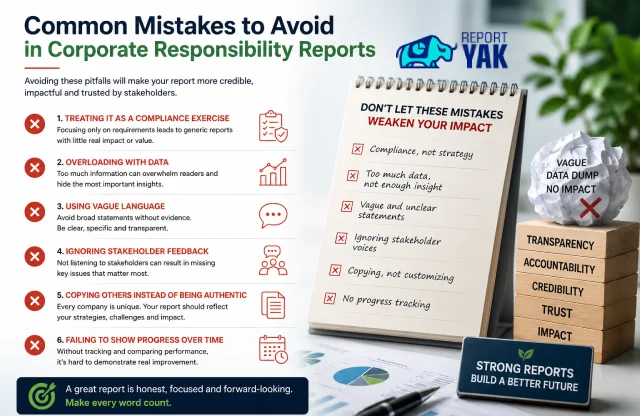
Even well-intentioned teams make mistakes when creating their corporate responsibility report. The good news is that most of these are easy to fix once you know what to look for. Here are the most common missteps and why they matter more than you might think.
Reporting Without a Clear Framework
Many companies fall into the trap of producing a CSR report without aligning to GRI, SASB or other recognized standards. They gather data and publish it without a consistent structure. This makes it hard for stakeholders to compare performance or verify claims.
Evolving standards mean companies that do not align early may struggle to catch up later. Without a framework, your report may feel incomplete. It also affects the quality of sustainability reporting. Stakeholders increasingly expect to see which standards your company follows.
Focusing on Positives and Ignoring Challenges
Some companies only share their best news. They highlight achievements but avoid discussing setbacks or areas for improvement. This approach weakens the report's credibility. Genuine transparency includes identifying trends, acknowledging challenges and outlining improvement plans.
Stakeholders expect honesty, not just good news. A report that feels too polished may raise doubts. Showing progress over time means being open about where you started and where you are headed. This builds trust and shows accountability.
Treating Design as an Afterthought
Many businesses pour enormous effort into gathering data and writing content. Then with very little time left, they rush the design. But a poorly designed report undermines even the strongest data. Text-heavy layouts, weak visuals and inconsistent formatting make the report hard to engage with.
Visual design plays a huge role in how the report is received. A well-designed report is more likely to be read, shared and referenced. Poor design sends the wrong message about your company's attention to detail.
Failing to Engage Stakeholders in the Process
Stakeholder engagement should inform what the report covers. It should not just be about who receives it. Many companies build reports without asking stakeholders what matters to them. This leads to reports that miss the key issues your audience actually cares about.
Engaging stakeholders early helps you focus on what is important. It also shows that your company values their input. Reports built around stakeholder feedback are more relevant, credible and impactful. Ignoring this step often results in a report that feels disconnected from your audience's needs.
Treating your corporate responsibility report as a communication tool, not just a compliance exercise, is key. When you get the process right, the report becomes a valuable asset for your business.
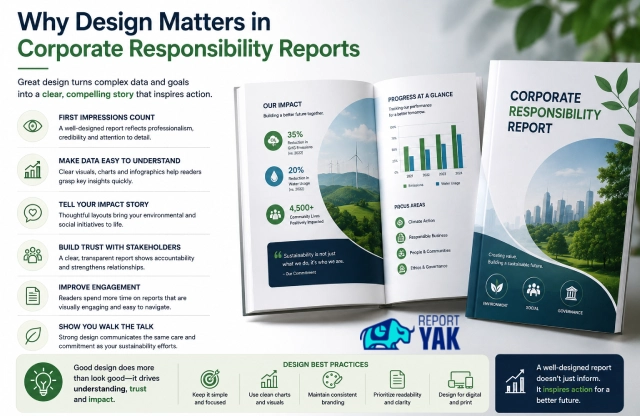
How a Well-Designed Corporate Responsibility Report Builds Business Value
A well-designed corporate responsibility report does more than share information. It creates real business value. It strengthens relationships with investors, customers and employees. Professional design is not just about looking good. It is about making your report work harder for your brand and your goals.
Strengthening Investor and Stakeholder Confidence
Investors and boards increasingly use CSR reports to evaluate long-term business health. ESG issues are now central to investment decisions. A strong corporate responsibility report signals that your company thinks beyond short-term profits. It shows responsible business management and long-term planning.
Providing stakeholders with a holistic view of your sustainability and financial performance builds lasting confidence. When your report is clear, data-driven and transparent, stakeholders feel more secure in their decisions. They see your company takes accountability seriously.
Enhancing Brand Reputation and Corporate Credibility
Socially responsible companies that report well attract better talent, partnerships and customers. The benefits of CSR reporting extend well beyond compliance. They shape how your company is perceived externally. A well-crafted report demonstrates your company's commitment to society and the environment.
Corporate reputation matters more than ever. A professionally designed report amplifies this impact. It shows that your company values quality, clarity and professional communication. This builds trust with customers, partners and the communities you serve.
Supporting Business Strategy and Decision-Making
CSR reporting helps companies identify trends, measure progress and refine their CSR strategies. Integrating sustainability into business intelligence allows for better planning and accountability. When you track key performance indicators consistently, leadership can make informed decisions.
Annual publications with consistent KPIs allow your team to measure progress over time. This cycle of reporting, reviewing and improving strengthens your sustainability practices. It also helps you align your corporate strategies with evolving standards and stakeholder expectations.
The Role of Professional Design in Report Impact
A well-designed report is far more likely to be read, circulated and referenced by stakeholders. Design and content must work together. Neither can carry the report alone. Custom design ensures your report reflects corporate identity and communicates with clarity and impact.
Report Yak specializes in creating corporate responsibility reports that are visually compelling and strategically on-brand. The team does not start with a template. They start with your brand, your audience and the story your report needs to tell. Every design decision is made with your goals in mind.
A strong corporate responsibility report is where that process begins. When handled by specialists who understand both design and communication, the difference shows from the very first page.

Why Choose Report Yak for Your Corporate Responsibility Report?
Choosing the right design partner matters. A corporate responsibility report should do more than look polished. It should clearly show your company’s commitments, values and progress. That is where Report Yak brings real value.
Specialists in Corporate and Sustainability Report Design
We work across annual reports, sustainability reports, ESG reports and corporate responsibility reports. That gives us a strong understanding of different reporting needs and audience expectations. We also understand how evolving standards shape the way companies communicate. From GRI and SASB to CSRD and integrated reporting, we know how to present information with clarity and purpose.
Design That Communicates, Not Just Decorates
A strong report needs more than clean pages and nice visuals. It needs structure, balance and a clear message. We design every report to help readers understand your company’s sustainability practices, social responsibility and governance commitments. From layout and typography to charts and photography, every element supports the story you want to tell.
End-to-End Support From Brief to Final Delivery
We keep the process simple and collaborative. First, we learn about your brand, your CSR strategies and your goals. Then we shape the report around your company’s sustainability efforts and audience needs. Finally, we deliver print-ready and digital-ready files that are ready to share.
You do not have to manage every detail alone. We handle the design so your team can focus on the content and the message.
Explore the Showcase and Get in Touch
The best way to understand our work is to see it. Our showcase includes reports across industries and formats, each designed to reflect the client’s brand and communication goals. If you want a report that builds trust, supports transparency and leaves a lasting impression, we would love to help.
Reach out to Report Yak to start your project. We create corporate responsibility reports that are clear, professional and built to engage stakeholders.
Your Corporate Responsibility Report Deserves Better - We Can Help
Your corporate responsibility report is more than a compliance document. It is a reflection of your company's values, commitments and progress. It shows how you handle your impact on society and the environment. Every section, from greenhouse gas emissions to employee engagement, shapes how stakeholders see your business.
A well-designed report builds trust. It communicates transparency, accountability and corporate governance. It makes your company's sustainability efforts easier to understand and more credible to investors, partners and customers. That kind of impact is worth investing in.
At Report Yak, we specialize in designing annual, sustainability, ESG and corporate responsibility reports. We work with businesses and institutions across industries. We bring the same level of care and craft to every project, from the first page to the final file. Our team understands reporting standards like GRI, SASB and CSRD. We also know how to balance data with storytelling and visual design.
Want to see what is possible? Head over to our Showcase page to explore the reports we have designed across a range of sectors and formats. The work speaks for itself.
When you are ready to get started, we would love to hear from you. Call us on 1800 121 5955 (India), email us at contact@reportyak.com, or reach out via WhatsApp or the Contact Form on our website. Let us create something exceptional together.
Related Posts
-
Why Your Annual Report Cover Page Design Matters Most
Apr 27, 2026Share
Copy Url
How to Craft a High-Impact Company Annual Report
Feb 27, 2026Share
Copy Url
Integrated Reporting Made Easy For Modern Companies
Dec 31, 2025Share
Copy Url