


Integrated Reporting Made Easy For Modern Companies
 Share
Share


 Copy Url
Integrated Reporting Made Easy For Modern Companies
An integrated report is no longer a “nice to have.” Today, it is fast becoming a smart way for organizations to explain how they perform, grow, and create value over time. In simple terms, an integrated report brings financial and non-financial information into a single report. It connects strategy, governance, sustainability, and performance in one clear story.
Over the years, corporate reporting has evolved. Financial statements alone are no longer enough. Investors, regulators, and other stakeholders want to understand risks and opportunities, decision-making, and how resources and relationships are managed. They also want to see how financial data connects with ESG, governance, and sustainability reporting. This shift has been shaped by global frameworks such as the integrated reporting framework, the international integrated reporting council (IIRC), GRI, and the IFRS Foundation. Together, they encourage integrated thinking and better disclosure.
At its core, integrated reporting provides a holistic and integrated view of the organization. It explains the business model, capital allocation, and value creation across the short, medium, and long term. It also helps providers of financial capital make informed decisions by showing how strategy links to performance against strategic objectives. Importantly, it improves connectivity between internal and external reporting. It aligns financial reporting, sustainability, and global reporting standards into one coherent narrative.
As expectations rise globally, many listed companies are rethinking their reporting process. They want clarity, credibility, and trust. That is where a well-crafted integrated report becomes a powerful strategic tool, not just a compliance document.
What an Integrated Report Really Means
An integrated report is a modern way to show how a business works and grows. It makes complex business information easier to understand. This section explains exactly what it is and why it matters without jargon or confusion.
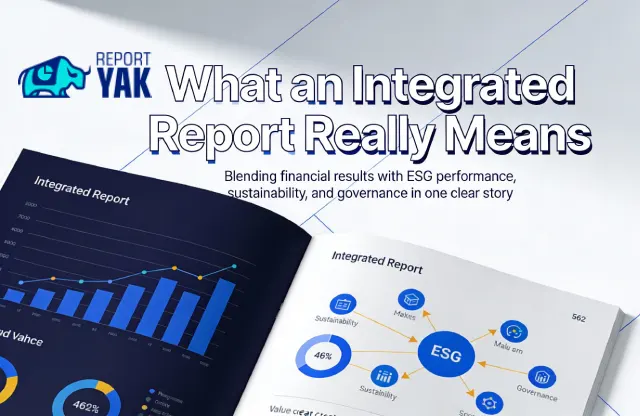
An integrated report is a clear and concise communication about how an organization creates value over time. It includes both financial results and other value-relevant data in one place. This means it blends financial reporting with non-financial facts, such as ESG performance, sustainability outcomes, and governance practices. By showing them together, a business can explain not just what happened, but why it matters.
Unlike a traditional financial report that mainly focuses on numbers, this type of reporting connects strategy, risks, governance, and performance with long-term value creation. It shows how strategic objectives link to outcomes and how risk management supports future growth. It also reflects how the organization uses resources and capital, including people, natural assets, and other capitals, to create value responsibly.
Bringing financial and non-financial data together helps businesses communicate better with investors, regulators, and other stakeholders. These readers get a complete view of how the business operates. They can see how decisions affect performance and long-term value. This makes external reporting more transparent and useful.
For many companies, preparing an integrated report can feel complex. That’s where expert partners like Report Yak can make a difference. We help organize data, shape the narrative, and create a clean, investor-ready story that reflects global reporting standards and stakeholder needs.
Why Integrated Reporting Matters Today
Today’s business world moves fast. Expectations move faster. Companies are now judged on more than financial statements alone.
Markets today expect transparency across financial reporting, sustainability, governance, and impact. Investors and regulators want to see how financial data connects with ESG frameworks, social and environmental priorities, and long-term plans. They want disclosure that explains how an organization operates responsibly and how it manages risks and opportunities. This shift reflects the evolution of corporate reporting and the growing focus on global reporting standards.
An integrated report helps meet these expectations by bringing financial and non-financial information into one clear view. Investors, providers of financial capital, and other stakeholders can understand how strategy links to performance and value creation over time. Employees, partners, and customers also benefit. They see how decisions support the business model and long-term goals. This builds trust and strengthens investor relations.
Integrated reporting also improves decision-making. Leaders see data with financial and non-financial insights side by side. This supports integrated thinking and helps teams make informed decisions about capital allocation and resources. At the same time, it reduces information overload. Instead of many disconnected reports, stakeholders get one report with connectivity and context.
Professional reporting firms play a key role here. They ensure accuracy, consistency, and alignment with frameworks such as the integrated reporting framework, GRI, and IFRS guidance. More importantly, they turn complex reporting into a clear, credible story that is easy to understand and trust.
Key Elements Every Integrated Report Should Include
An integrated report works best when it follows a clear structure. Each section plays a role in telling one connected story. Together, these elements help readers understand how the business operates today and how it plans to create value over time, without unnecessary complexity.
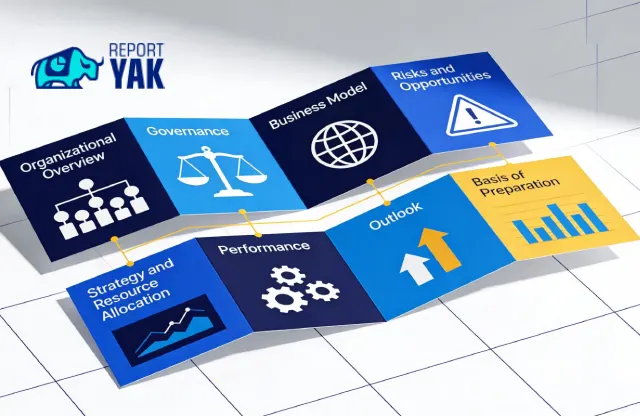
At the center of an integrated report are a few core elements that work together to present a complete and balanced view of the organization:
Organizational Overview
This section explains what the organization does and why it exists. It sets the context. It shows how products, services, and relationships support value creation over time.
Governance
Governance explains who leads the organization and how oversight works. It outlines roles, responsibilities, and accountability. Strong governance builds confidence with investors, regulators, and other stakeholders.
Business Model
The business model shows how inputs are turned into outcomes. Inputs may include financial capital, people, or partnerships. Activities explain what the organization does. Outputs and outcomes show the results and their impact.
Risks and Opportunities
This element highlights what may affect performance. It covers risks, uncertainties, and emerging opportunities. It also shows how risk management supports resilience and informed decision-making.
Strategy and Resource Allocation
This section explains where the organization is headed. It links short-term priorities with long-term goals. It also shows how resources are allocated responsibly to meet strategic objectives.
Performance
Performance brings numbers and outcomes together. It combines financial data with non-financial information such as ESG and sustainability indicators. Clear metrics make progress easier to understand.
Outlook
The outlook looks ahead. It explains future expectations, challenges, and opportunities. It shows the organization's ability to create value over the short and long term.
Basis of Preparation
This section clarifies reporting boundaries, data sources, and the framework followed. It improves transparency and credibility. Experienced partners like Report Yak help ensure alignment with recognized frameworks such as IIRC guidance, while keeping the report clear and cohesive.
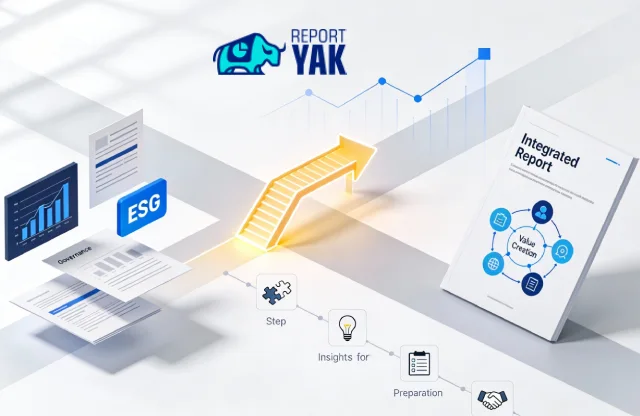
How Companies Can Move to Integrated Reporting
Moving to integrated reporting does not have to feel overwhelming. Most companies already have much of the information they need. The shift is about connecting it better. This section explains how organizations can move towards an integrated report with clarity, confidence, and the right support.
-
Assess the Current Reporting Approach
The journey often starts with a simple review. Companies look at existing corporate reporting, financial statements, and sustainability reporting. This helps identify gaps, overlaps, and areas that need better connectivity. It also shows what already works and what needs refinement. -
Bring Teams Together Early
Integrated reporting works best when teams collaborate. Finance, ESG, HR, operations, and leadership all play a role. Early alignment supports integrated thinking. It also ensures internal and external reporting tell one consistent story. -
Collect the Right Data
The focus then shifts to gathering financial data, non-financial insights, risks and opportunities, and key performance indicators. This includes governance practices, social and environmental impact, and value creation drivers. Clean data supports better decision-making. -
Create the Narrative
This is where numbers turn into meaning. The organization builds a connected story around its business model, strategic objectives, and value over time. It explains how resources and relationships support long-term outcomes. -
Design the Report
Clear visuals matter. Charts, diagrams, and simple layouts reduce information overload. They help stakeholders understand performance at a glance and improve overall communication. -
Follow Global Frameworks
Alignment with the international integrated reporting framework and other global reporting standards builds credibility. It also supports disclosure that meets investor and regulator expectations globally. -
Review and Finalize
The final stage focuses on accuracy, clarity, and completeness. Professional partners like Report Yak simplify this entire reporting process. They reduce confusion, ensure compliance, and deliver a report that is clear, cohesive, and investor-ready.
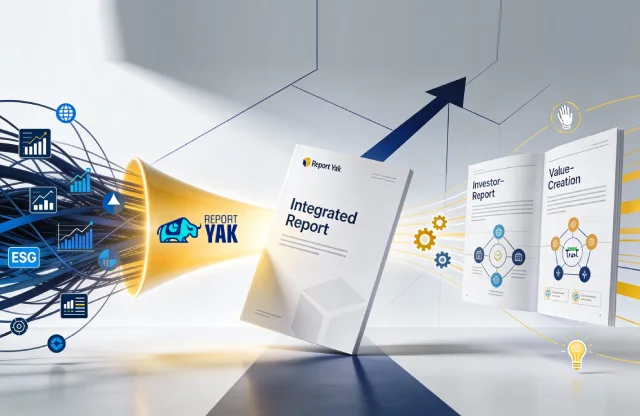
Why Partnering with Report Yak Makes the Process Easy
Integrated reporting can feel complex at first. There is data, structure, and high expectations to manage. This is where the right partner makes all the difference. This section explains how expert support simplifies the journey and delivers reports that stakeholders trust.
An integrated report needs clarity, credibility, and strong storytelling. Report Yak helps companies achieve all three. Report Yak understands how investors, regulators, and other stakeholders read and evaluate business reporting. As a result, every report is investor-ready and shaped to support trust, transparency, and informed decision-making.
One of Report Yak’s key strengths lies in skilled writers and designers working in sync. This team brings clear structure and visual strength to corporate reporting. Complex financial and non-financial information is simplified without losing meaning. Data becomes easier to read, easier to follow, and easier to recall. This approach reduces confusion and improves overall communication.
Clear storytelling sits at the center of the process. Raw inputs such as financial data, ESG disclosures, governance details, and sustainability performance are woven into one connected narrative. The focus remains on value creation over time. Strategy, risks, performance, and outcomes are shown together, not in isolation. This helps stakeholders understand how decisions shape long-term results.
Report Yak also ensures alignment with global reporting frameworks and expectations. This lowers compliance risk and brings consistency to external reporting. Internal teams save time and effort. Reporting quality improves without added pressure.
With the right partner, integrated reporting becomes manageable and meaningful. Companies can begin the journey with confidence, supported by expertise that brings clarity at every step.
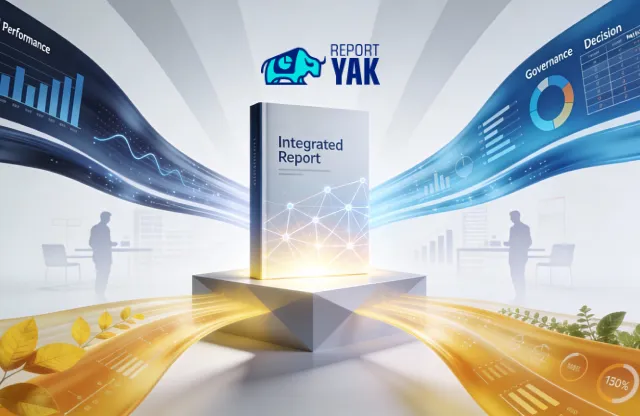
Bringing Integrated Reporting Together with Report Yak’s Expertise
Integrated reporting is no longer about ticking boxes or meeting minimum disclosure needs. It reflects how modern organizations think, operate, and communicate. Businesses today must explain not only financial performance, but also how governance, sustainability, and decision-making shape value creation over time. This shift has redefined corporate reporting across industries and markets.
An integrated report brings clarity to this complexity. It connects financial and non-financial information into one coherent narrative. Stakeholders gain a clear view of strategy, risks and opportunities, resource allocation, and long-term outcomes. Investors benefit from better insight. Regulators see stronger governance. Internal teams gain alignment. Most importantly, reporting becomes purposeful rather than fragmented.
However, strong reporting depends on structure, accuracy, and storytelling. This is where the right expertise matters. Report Yak helps organizations navigate global reporting expectations with confidence. From sustainability and ESG reporting to annual and business intelligence reports, Report Yak turns data into insight and insight into impact. Every report is designed to be clear, credible, and investor-ready. Reporting standards are respected. Materiality is addressed. The final outcome supports informed decision-making and builds trust.
If your organization is planning to adopt integrated reporting or refine an existing approach, expert support can make the journey simpler and more effective. Report Yak is the premier report design agency in India, trusted for annual, sustainability, ESG, and integrated reporting.
Explore the different reports designed by Report Yak on the Showcase page. To book a discovery session, call 1800 121 5955 (India) or email contact@reportyak.com. You can also connect via WhatsApp or reach out through the Contact Form on the website.
Related Posts
-
How to Craft a High-Impact Company Annual Report
Feb 27, 2026Share
Copy Url
Simplifying ESG Disclosure for Better Impact
Aug 28, 2025Share
Copy Url
GRI Sustainability Taxonomy: Learn How to Turn Data Into Advantage
Jul 1, 2025Share
Copy Url